

Copyright © 2026 Jiangnan Textiles (Shanghai) Co,. Ltd.
SEARCH WHAT YOU WANT
|
Case |
Product |
Application |
Main Value |
|
01 |
Low Melt Fiber |
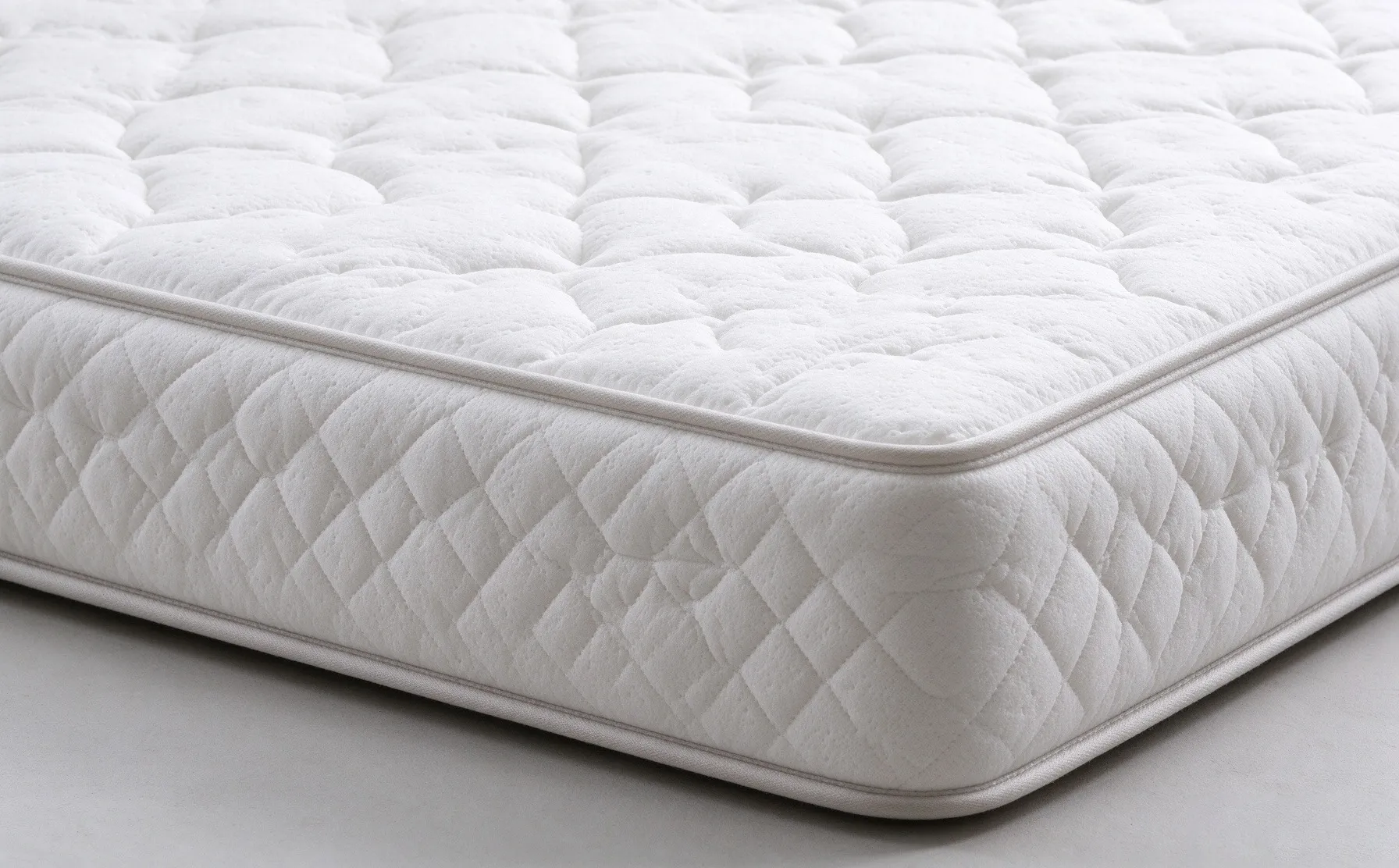
Mattress Nonwoven |
Chemical-Free Thermal Bonding |
|
02 |
Polyester Hot Melt Yarn |
Footwear Upper |
Lightweight & Zoned Reinforcement |
|
03 |
Off Grade Viscose Fiber |
Blended Yarn |
10% Cost Reduction |
● 30% Low Melt Polyester Fiber — used as the binder fiber
● 70% Structural Polyester Fiber — hollow conjugated siliconized polyester fiber for loft and resilience
|
Property |
Result |
|
Bonding Strength |
Superior fiber-to-fiber bonding without conventional chemical adhesives |
|
Elasticity & Resilience |
High recovery and shape retention |
|
Air Permeability |
Excellent breathability with an open, lofty structure |
|
Durability |
Secure fiber bonding without delamination |
Reduced chemical adhesive use
● No conventional resin binder was required for fiber-to-fiber bonding.
Lower VOC concerns
● The process avoids solvent-based adhesive systems.
Recyclability potential
● The all-polyester material construction supports easier material recovery compared with mixed-material constructions.
Energy-efficient bonding
● Thermal bonding can reduce the need for conventional adhesive curing processes.
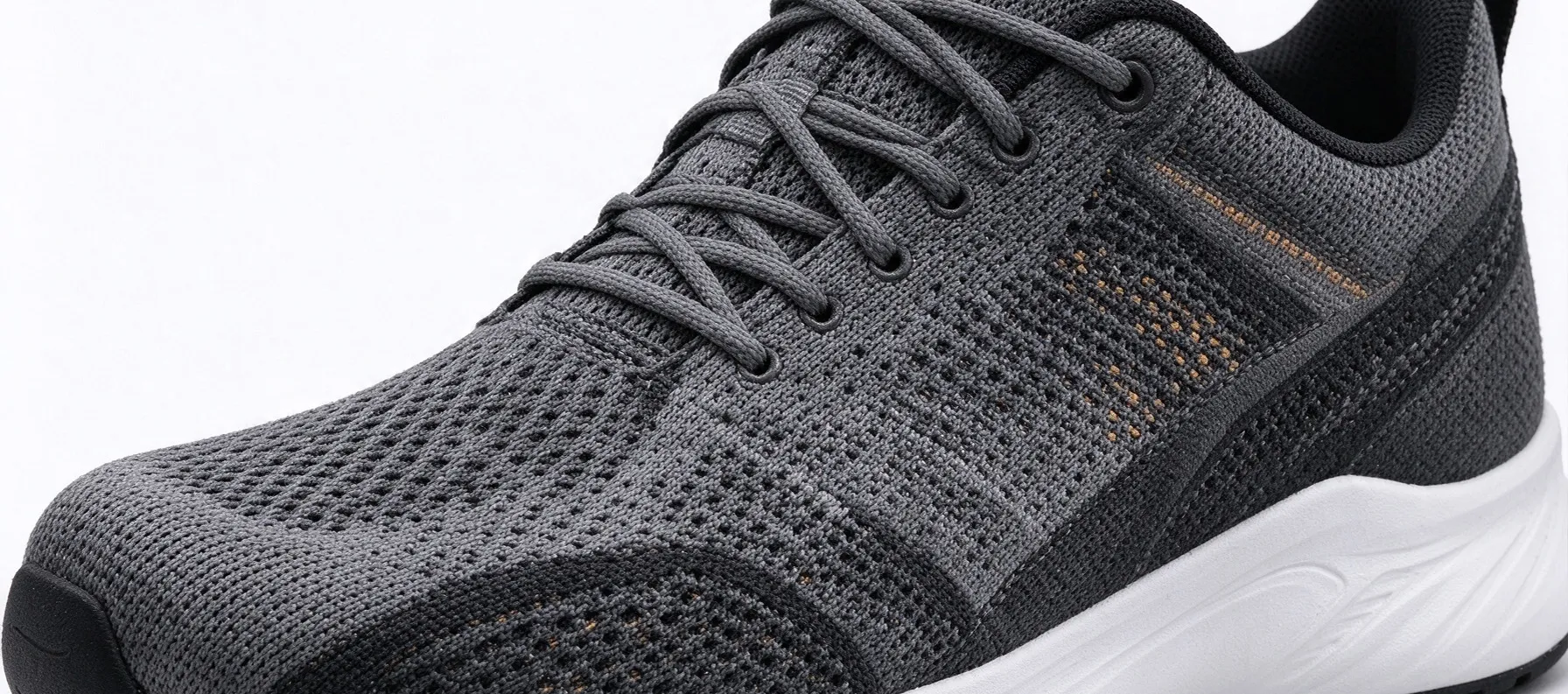
● Heel: Higher-density reinforcement for support and rigidity
● Toe Box: Reinforcement for protection and abrasion resistance
● Forefoot / Midfoot: Lower-density incorporation to maintain flexibility
● Eye-stay Area: Structural support for lace retention
|
Performance Area |
Result |
|
Weight Reduction |
Typically saved 15–30 g per shoe |
|
Heel Counter |
Approximately 85–90 Shore A hardness |
|
Forefoot / Midfoot |
Approximately 35% elongation for natural flexion |
|
Bonding Strength |
Peel strength exceeding 40 N/cm |
|
Dimensional Stability |
Boiling water shrinkage reduced to ≤ 2% |
|
Breathability |
Open knitted structure maintained while providing targeted reinforcement |
|
● Fewer Assembly Steps ● Targeted Performance ● Reduced Material Waste ● Simplified Material Construction |
● Environmental Benefits ● Reduced VOC Exposure ● Reduced Production Waste ● Potential for Material Simplification |
Consistent Blended Yarn Quality
The optimized fiber combination achieved the quality requirements of the customer's target blended yarn.
10% Raw Material Cost Reduction
The optimized use of Off Grade Viscose Fiber reduced the customer's raw material cost by approximately 10%.
Improved Cost Performance
The solution provided a practical balance between fiber quality and production economics.
Optimized Fiber Utilization
Instead of relying exclusively on premium-grade viscose, the customer was able to use a more cost-effective fiber option within a controlled blend.
Off Grade Viscose Fiber is not simply treated as waste or inferior material.
It is a cost-effective viscose fiber option selected through a controlled quality grading system. For suitable spinning applications, it can retain the core characteristics required for blended yarn production while offering a lower material cost.
The key is not simply choosing a lower-priced fiber, but finding the right fiber + right blending ratio + right spinning process.
01 — Understand the Application
We first identify the customer's final product, production process and performance requirements.
02 — Match the Material
We recommend suitable fiber types, specifications and grades based on the application.
03 — Support Trial Production
Where required, different specifications or blending ratios can be evaluated through production trials.
04 — Optimize the Solution
The goal is not simply to supply a fiber, but to identify a workable combination of performance, processing and cost.
05 — Support International Supply
We provide specification coordination, quality control, documentation and shipment support for international B2B orders.
Copyright © 2026 Jiangnan Textiles (Shanghai) Co,. Ltd.